


The Evolving Role of Scientific Congresses in Medical Collaboration
Updated: Apr 14
Reflections from Francesco Giovinazzo

Scientific congresses remain one of the most important environments in which medical communities exchange knowledge, develop professional networks and identify new directions for research. However, the context in which these meetings operate is changing rapidly.
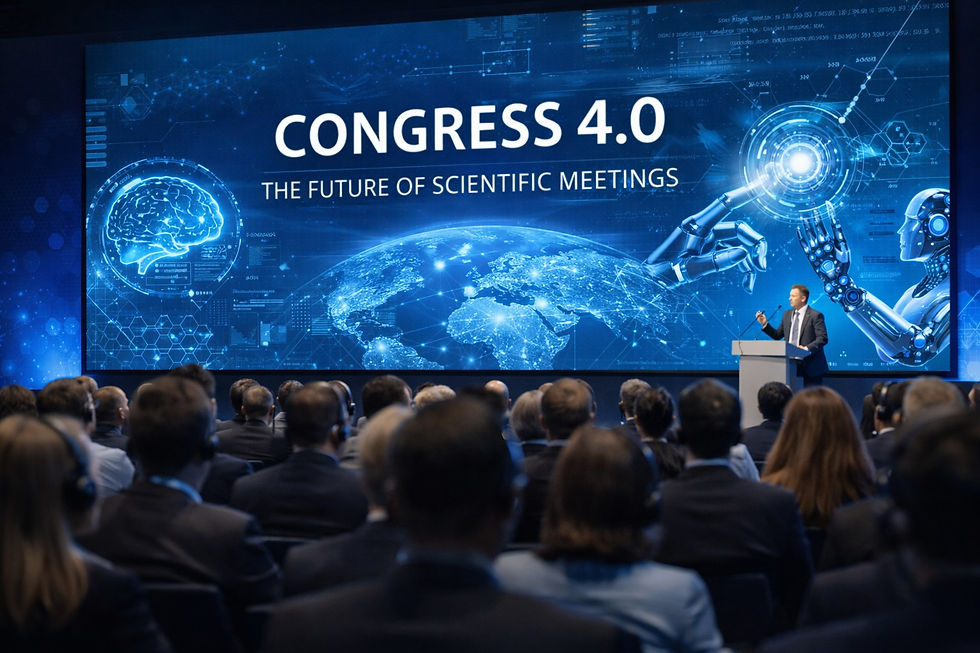
During the Association Days Europe seminar dedicated to the future of scientific congresses, Francesco Giovinazzo reflected on how medical meetings are adapting to new technological, organisational and cultural dynamics within the global scientific landscape.
For many decades, scientific congresses have represented the primary platform through which physicians and researchers could present new findings, discuss clinical experiences and build professional relationships.
Today, however, the circulation of scientific information has changed profoundly. Digital platforms, online journals and collaborative research networks allow knowledge to be shared much more rapidly than in the past. As a consequence, the traditional function of congresses as the main channel for disseminating research results has evolved.
Scientific meetings are increasingly becoming environments for interaction, interpretation and strategic discussion, rather than simple venues for the presentation of data.
Within this context, the role of scientific societies remains central. These organisations are responsible not only for defining the scientific programmes of congresses, but also for ensuring that meetings continue to serve as meaningful spaces for professional dialogue and collaboration.
One of the key challenges is therefore to maintain the value of face-to-face interaction while integrating the new technological tools that facilitate communication and knowledge exchange.
The pandemic accelerated the adoption of digital formats, making hybrid and online participation much more common. While these solutions have expanded access and reduced certain logistical barriers, they cannot fully replace the value of in-person scientific dialogue.
Direct interaction between professionals continues to play an essential role in building trust, discussing complex clinical situations and generating new research collaborations.
For this reason, the future of scientific congresses will likely depend on the ability to combine technological innovation with environments that encourage direct professional exchange.
In this evolving landscape, the design and organisation of congresses require increasingly sophisticated models capable of integrating scientific quality, technological tools and efficient logistical frameworks.
Initiatives such as Association Days Europe provide opportunities to reflect on these changes and to bring together scientific communities and congress organisers in order to explore new approaches to the organisation of international scientific meetings.
This article is based on remarks delivered during the Association Days Europe seminar on the future of scientific congresses.

Francesco Giovinazzo
Francesco Giovinazzo is a medical professional actively involved in the organisation and development of scientific congresses. His work focuses on the relationship between scientific communities, professional education and the evolving formats of international medical meetings.
Insights from the Association Days Europe Seminar

This article is part of the Scientific Congress Insights editorial stream of the Congress Intelligence Journal, developed within the analytical framework of the Congress Intelligence Unit.
Association Days Europe
Association Days Europe brings together presidents and delegates of scientific societies with destinations and organisers involved in international congresses.
The event offers a space for dialogue on the evolving role of scientific meetings within the global research ecosystem.


Comments